
Blog
I’ve listened to the Cambridge Audio Evo 300 – it’s powerful, but that’s only half the story

For decades, serious hi-fi came with a serious footprint, and an almost instinctive belief that bigger meant better and more meant, well, more – both in performance and in the space you needed to accommodate it all.
Once upon a time, in an economy that feels like a distant memory, I rented a house that allowed me that space, and I had the luxury of my own separate listening and testing room. That space has evaporated with every move since, not helped by the arrival of two kids, meaning my hi-fi setup has had to adapt over time as well.
Simplicity and flexibility
These days, that has meant a streaming amp like Cambridge’s Audio Evo 150 SE is a great option, and gives me the flexibility to add some sources back in over time. But you don’t have to be working with less space to crave the simplicity that a streaming amp delivers – you don’t need an excuse to choose convenience.
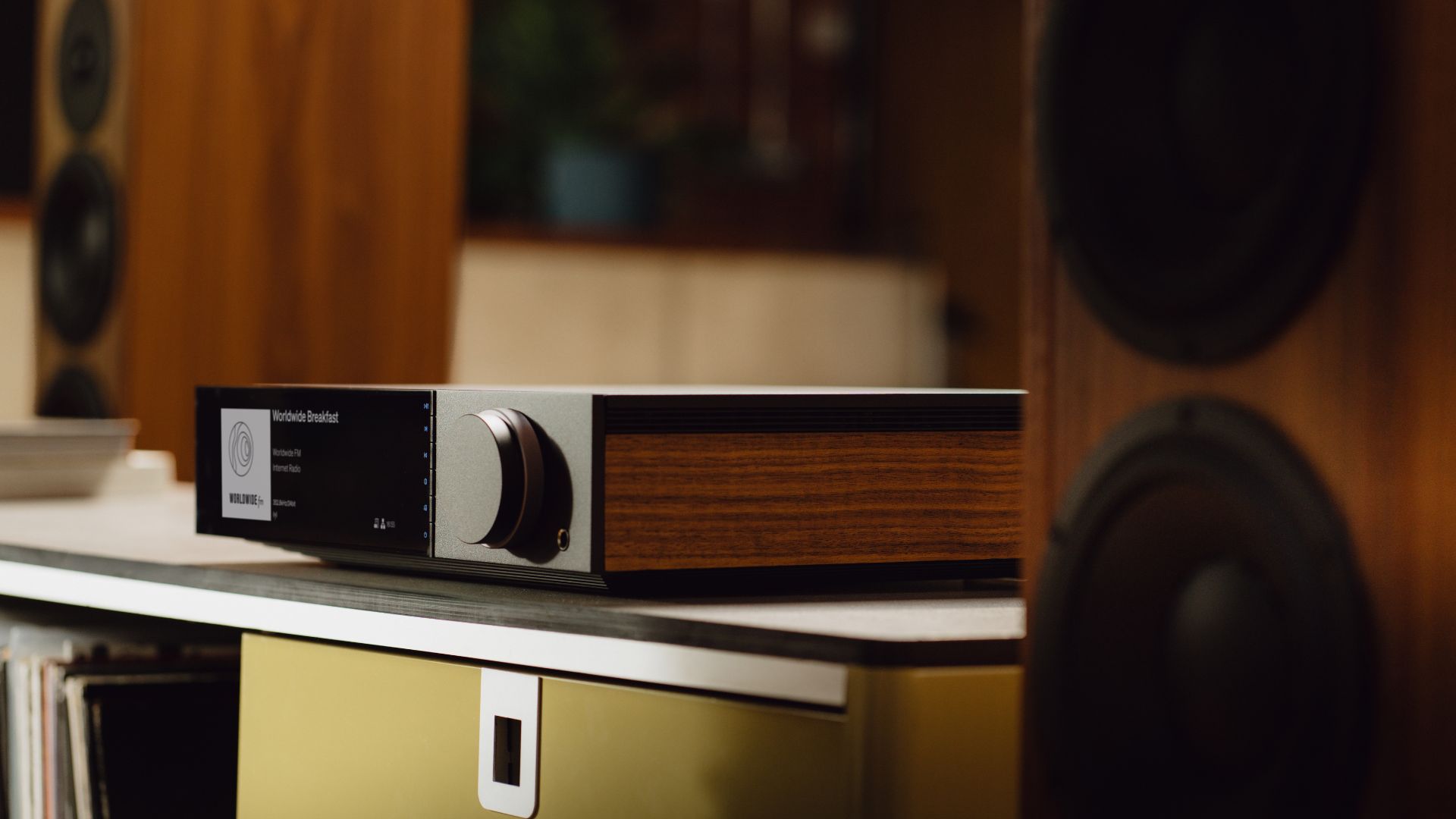
Recently I heard the Cambridge Audio Evo 300, and it’s a great choice for those with larger listening spaces and more powerful speakers. Delivering 300 watts per channel of Class D amplification into 8 ohms, it’s twice as powerful as the 150 SE, but in almost as compact a box – it’s only 7cm wider, which makes it incredibly easy to accommodate wherever you listen to your music.
That’s also helped by the fact it looks lovely, with a sleek aluminium chassis, large 7.8-inch display and a choice of interchangeable side panels of matching black or real wood.
What’s perhaps surprising is that all of this extra power and performance has been squeezed out of the same incredibly talented Hypex NCOREx amplification modules. However, there has been a DAC upgrade to the 32-bit ESS Sabre ES9038Q2M alongside other improvements, including a new dual-mono layout for more precise stereo separation and a fully balanced preamp stage to cancel out noise and reduce distortion.
Well connected
It’s even more flexible than the 150 SE when it comes to connectivity too. You’ve still got the moving magnet phono stage for hooking up a turntable, alongside optical, RCA and balanced XLR inputs, but the 300 also has eARC for running your TV’s audio through it – along with independent volume and subwoofer controls.
Of course, streaming is covered off from all angles via Cambridge Audio’s StreamMagic platform, including Spotify Connect, Tidal Connect and Qobuz Connect, as well as AirPlay 2, Google Cast, aptX HD Bluetooth 5.4 and a Roon-ready status.
I had the pleasure of spending a bit of time with the Evo 300 and a pair of Dynaudio Contour Legacy floorstanders – a £10,000 pair of speakers that this little streaming amp handled with ease. In that time, I listened to just the streaming side of the amp and found it produced a confident, authoritative sound with an incredible sense of scale. Even at the considerable volume we were listening at, there was clearly more to spare if we’d have felt so inclined.
More than muscle
But there is also more to this amp’s talents than just muscle. There’s a respectable level of control and composure here, with an open airy quality to the midrange, a natural handling of vocals and an expressive character that is plenty of fun, but without compromising on precision. Even as you push the volume, the Evo 300 keeps clarity, refinement and insight front and centre, proving that as well as pure power, this amp can do nuance too.
That doesn’t mean there aren’t going to be rooms and systems where the Evo 300 might feel a little surplus to requirements though. It costs £3,499, so you’re going to want the speakers and the space to make the most of its extra capabilities compared with the £1,999 Evo 150 SE – or at least feel confident you’re going to need the growing room over time.
If that sounds like you, and the Evo 300 fits into your budget, my time with it so far has been incredibly promising indeed. For anyone looking for just-add-speakers convenience without feeling like they’re compromising on serious hi-fi performance, the Evo 300 makes a convincing case that you don’t need a rack of separates to get there.