
Blog
Can You 3D Print An Engine Block?

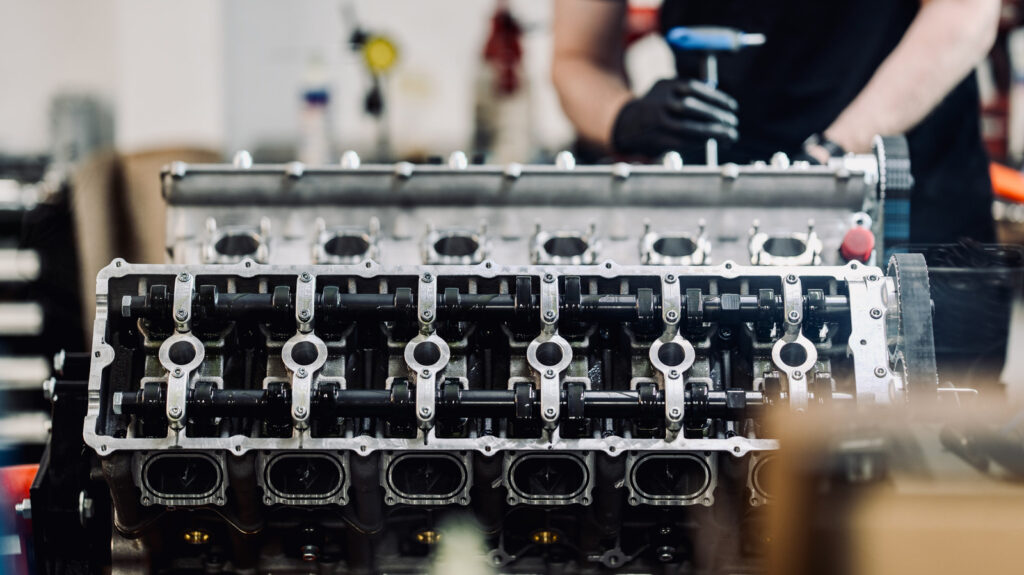
3D printing is evolving from a workshop hobby to a tool used for industrial and commercial applications, and so much more. It’s even being used in the automotive world, where some people are 3D printing parts for their cars. When it comes to a major project like 3D printing an entire engine block, this was successfully demonstrated by Nikon SLM Solutions and Bosch Industry Consulting in the summer of 2026.
This joint effort produced a fully printed aluminum one-piece V8 engine block using metal additive technology. The project used a digital design file to build the block layer by layer, instead of using traditional casting methods and custom tooling. This process allowed engineers to experiment with different designs that would be hard to produce through conventional means. This includes the construction of the block’s complex structures, as well as internal cooling features. Only the block itself was printed and not the complete engine assembly with cylinder heads and other components.
The Nikon/Bosch engine block was created around 10 years after a similar project in Germany back in 2016. Hoffman Industrial Prototyping, a German prototyping company, worked with Volkswagen to produce a functional aluminum cylinder engine block using a metal 3D printer. The block weighed around 55 pounds and underwent testing by VW who inspected its internal structure, while also checking for manufacturing accuracy. Though this project was a prototype, it showed that 3D automotive printing could move beyond just basic concepts.
3D printing is changing what automotive engineers can build
Before creating a 3D-printed V8 engine block, Bosch had already invested millions of dollars into the expansion of its metal additive manufacturing. The company opened a new metal 3D printing center in Germany that was outfitted with Nikon SLM Solutions’ NXG XII 600 system. The goal was to produce complex metal components for automotive and industrial use, with engine blocks as an example of where the technology could provide certain advantages.
3D printing has been explored by automakers like Porsche, who created a fully 3D-printed electric drive unit housing prototype in 2020. This prototype combined the motor and gearbox into a single component, which later underwent both quality and stress testing. This design reduced the number of separate parts needed, while also improving stiffness in areas that experience higher loads.
But while additive manufacturing has shown it can produce functional engine components, that doesn’t mean the time is right for you to buy a 3D printer. In fact, 3D printers may not completely replace traditional manufacturing methods the way some people believe they will. That’s because additive manufacturing is designed to work in conjunction with existing processes rather than replace them entirely. So 3D printing is instead used to help engineers create more complex designs, cut down development time, and produce more specialized components.