
Blog
New battery tech could make home solar batteries safer and last for decades.

Sixty thousand charge cycles for industrial or grid-scale batteries is the kind of number that sounds like a typo at first, but Australian researchers say their new battery technology actually achieves it.
A team at Flinders University has solved a longstanding stability problem in water-based zinc-iodine batteries. It opens the door to energy storage systems that barely degrade even after decades of daily recharges.
What did the researchers figure out?
Zinc-iodine batteries have long struggled with a specific problem. The iodine compounds can move away from the cathode (the positive electrode), attack the zinc electrode, and slowly damage the battery. Earlier solutions tried trapping the compounds with charged additives or in porous materials.
However, neither approach worked well enough. The Flinders team solved this with a cage made from cyclodextrin, a ring-shaped molecule derived from starch, which they turned into a polymer network. The cage captures the iodine compounds while still allowing them to take part in the battery’s reaction.
One version of the material struck that balance much better than another that held the compounds too tightly. The resulting battery kept almost all of its capacity after more than 60,000 charge cycles. It could also recharge in roughly three minutes under high-current testing.
Where will this technology actually be used?
I don’t expect to see this battery technology in your next smartphone or laptop anytime soon. Zinc-iodine chemistry lacks the volumetric energy density required to power slim consumer devices. However, that shouldn’t undermine how useful this breakthrough could be, especially for stationary energy storage.
Because the battery uses a non-flammable, water-based electrolyte and cheap plant sugars instead of mined lithium or cobalt, it could offer a safer, cheaper, and, most importantly, more sustainable option for storing energy from wind and solar plants.
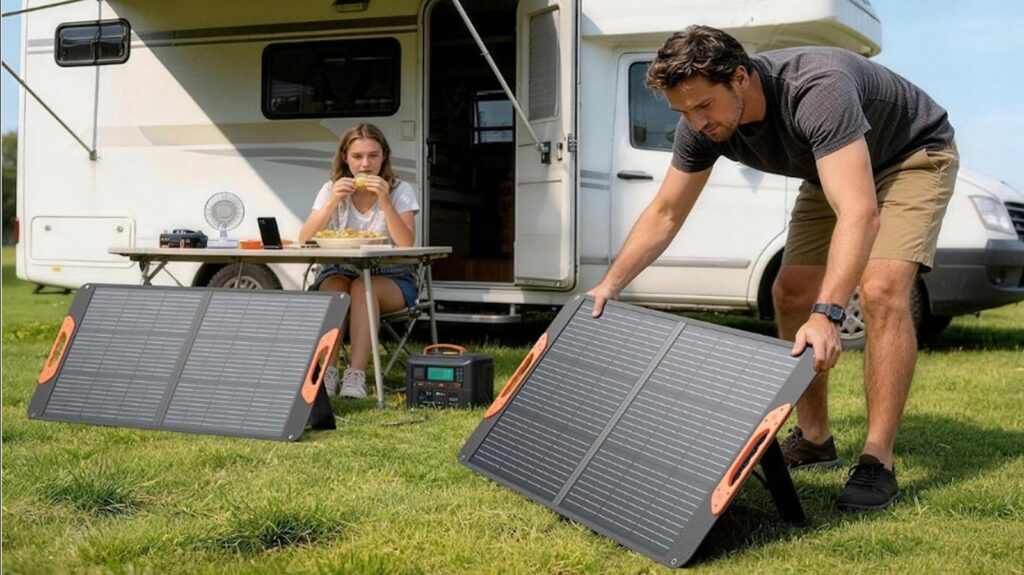
For consumers, the biggest potential is home energy storage. If implemented, the battery technology could enable a home solar battery that lasts for decades, needs far fewer replacements, and can store excess energy for backup at night or during outages.
The extremely long cycle life could help reduce the long-term cost of home energy solutions. However, despite the breakthrough, scaling remains difficult, and home zinc-iodine batteries are likely several years away from reaching individual consumers, potentially in a couple of years or more.