
Blog
Samsung Galaxy Z Fold 8 Ultra Review

Verdict
Although it might have some trouble earning its ‘Ultra’ moniker, Samsung’s premium book-style foldable has never felt more well-rounded.
-
Really good sustained performance
-
Thin, lightweight design that’s very easy to open
-
Battery life is improved from the last generation
-
Anti-glare coating on the internal display is the real deal
-
The 3x zoom camera is still quite poor
-
Battery life still doesn’t match competitors
-
Cover screen feels a little narrow
-
No stylus support
SQUIRREL_PLAYLIST_10208647
Key Features
-

Review Price:
£1899
-
Upgraded ultra-wide camera
Now bumped up to 50MP
-
Larger capacity 5000mAh battery
Alongside faster 45W charging
-
Faster Snapdragon 8 Elite Gen 5 chip
Flagship level performance
Introduction
With all the hype around the new, squatter form factor of the Z Fold 8, you could be forgiven for forgetting about the Samsung Galaxy Z Fold 8 Ultra.
This is, for all intents and purposes, the natural successor to the Galaxy Z Fold 7 – and while a lot of it seems the same as before, there are enough small changes here to make it a much better experience than before too. The real question is, is it enough of an upgrade to be deserving of its Ultra branding?
Let’s get into it.
Design
- Subtly softened edges for nicer in-hand feel
- Snappier, more durable hinge
- Minimal crease on foldable screen
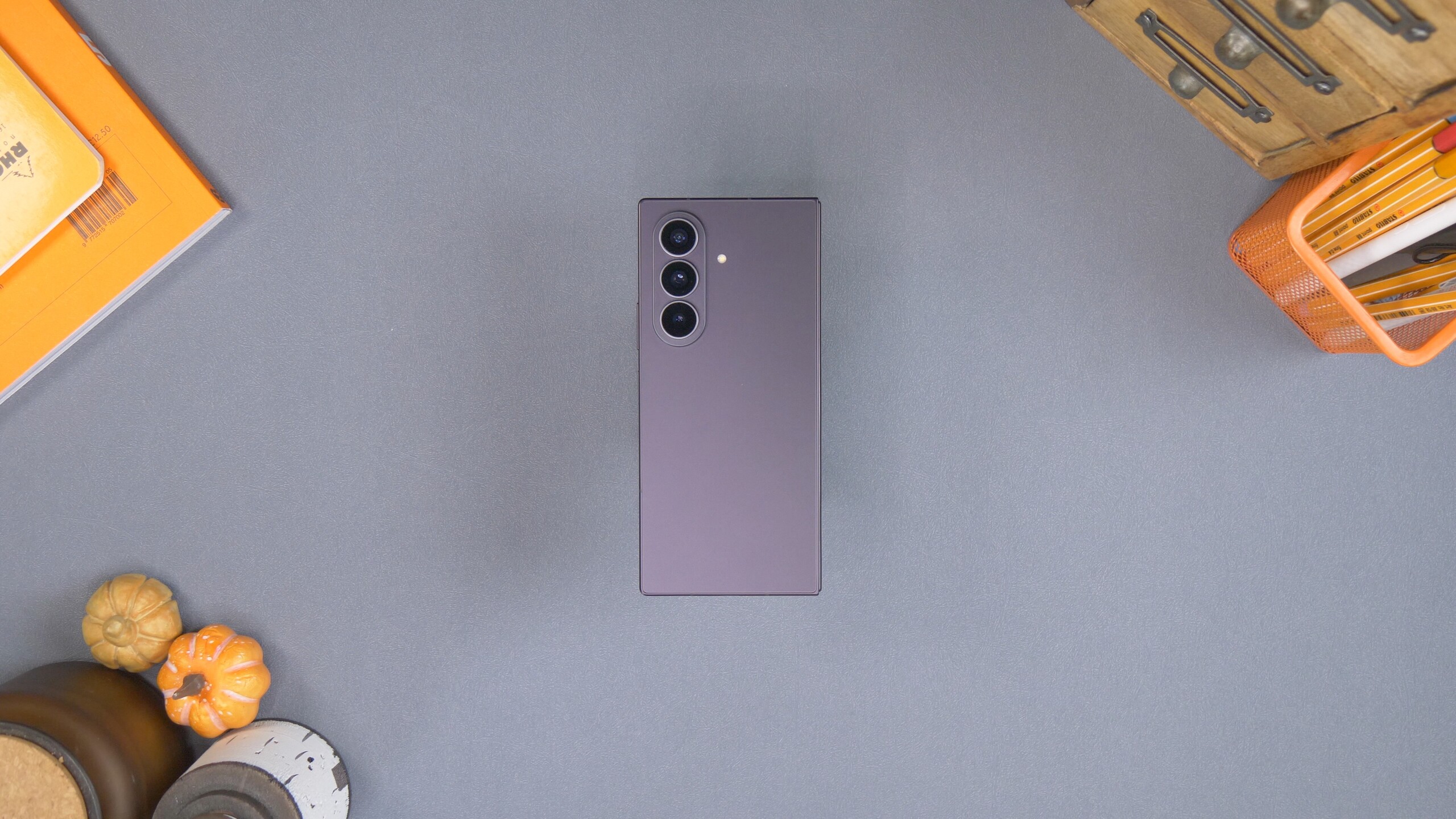
You could be forgiven for looking at the Z Fold 8 Ultra and thinking, not a lot has changed since the Z Fold 7, its natural predecessor. And, for the most part, you would be right. Beyond some new splashes of paint, not a huge amount has changed since the last one.

To say nothing has changed would be inaccurate though. There are some very subtle changes that have made the experience of holding and using it better than before.
Samsung might claim this is thinner than the last one, and it may well be if you ignore the clearly chunkier camera bump. But that’s such a small difference, it’s really neither here nor there. And to be fair, it is difficult to see how they’d ever make it meaningfully thinner without removing the Type-C charging port, or, y’know, all the internal components that make it work.

What makes the biggest difference is the shape of the phone, and the upgraded hinge. Every edge, corner and angle has been softened ever so slightly. This makes it a softer shape that’s just that tiniest bit more comfortable in the hand, but more importantly, the slight rounding of the edges means it’s easier to get your thumb between the two halves of the display.

Opening this phone is much easier for that reason, and for the reason that the hinge has more snap. Literally. There’s such a satisfying clap sound when you open or shut the phone, it’s almost addictive. Good job it’s been designed to be pretty durable too then.
There have been a few more durability tweaks made that aren’t as obvious to the senses though. The raised bumps on either end of the hinge have been increased in size, presumably to offer better obstruction to any dust or fluff from your pockets that might otherwise get in there.

The display itself has also been sured up with an additional layer of titanium alloy film. So it not only has that backplate from before, but also has another film bonded to the display to make sure this screen can survive daily use as your phone.
It’s clearly not rigid glass still, so won’t offer much protection against scratches, but it will be better able to cope with being opened and shut repeatedly than any previous fold. And – it’s early days clearly – but the crease on the display is quite minimal.

After a few days using it, it went from invisible to just about perceptible on a dark screen, but it’s very much ignorable once the screen is on and you’re in your content. It’s not that big a dip, and so easy to ignore when you run your finger over it as well. Still, not quite on the same level as Oppo’s Find N6 crease, which is virtually non-existent.
Another area it’s not quite at the same level as some of its competition – namely the Honor Magic V6 – is in water and dust resistance. Its IP48 rating means it’s very well protected against water getting inside, but isn’t completely dust-tight.
Screens
- Narrow cover screen remains
- 8-inch internal screen is much better
- No S Pen support
It’s safe to say that one area that’s seen very little (if any) change from the last version is the cover screen. While the regular Galaxy Z Fold 8 has completely changed to a new, wider, squatter form factor, the Z Fold 8 Ultra retains the same long, fairly narrow screen as the Z Fold 7.

I still find it a little cramped to use two-handed when typing and replying to messages, but it’s a pretty comfortable one-handed phone. It gives you enough surface area to make tasks like scrolling through messages and social media feeds convenient.
Otherwise, it’s a sharp, bright and smooth panel that’s capable of hitting up to 120Hz refresh rates when required. Still, its shape and size don’t exactly make it well-optimised for video or gaming. It’s still subject to letter or pillar-boxing – or heavy cropping – for anything that doesn’t match its narrow, long aspect ratio.

One thing you might see as a positive is that you can customise it totally separately from the main internal display. While most foldables just mirror the internal panel, Samsung lets you make it different. You can set different wallpapers, lock screens and always-on displays.
Personally, I see it as a chore having to set these things up twice. You might disagree though.

It’s on the internal display you’ll find the bigger visual differences. Most of the upgrades on that flexible panel are quite subtle, but there is at least one that makes a big difference: anti-glare.
Flexible plastic displays typically struggle more with visibility under bright lighting than glass, but the anti-reflective nature of the Z Fold 8 Ultra’s film is so much better than the Z Fold 7 that came before. Looking at it under bright lighting in my studio, the difference is significant. In fact, it’s better at cutting out reflections than the Razr Fold, Pixel 10 Pro Fold and isn’t far off the levels offered by the Honor Magic V6.

The fact the display can also reach higher levels of brightness than its predecessor also means it’s capable of cutting through any reflections that are on the screen better than before. It’s a big, expansive screen too, hitting 8 inches diagonally, and with more pixels packed into that space than the Fold 7, it’s a panel that elevates content more than its predecessor.
When you combine that improvement with the – so far – less visible crease, it’s a further step towards removing the optical compromises associated with flexible, plastic-coated displays.

Sadly though, the S Pen support remains missing from last year. Samsung removed the digitising layer required to make it possible, in an attempt to keep the phone as thin as possible. So if that’s a bit of a deal-breaker for you, there’s always the Razr Fold, which supports a stylus and ships with one, too.
Otherwise, it’s very hard to fault the quality of the display. It’s bright, clear, and has vibrant colours without being too over-saturated and enough contrast to make content pop. Viewing angles could be improved slightly, but that’s really nit-picking at this point.
Cameras
- Primary camera remains capable
- Ultrawide upgrades make a difference
- Zoom lens is very underwhelming
Cameras are, typically, the area where foldable phones are compromised. Even those with bigger sensors like the Honor Magic V6, Razr Fold and Oppo Find N6 won’t compete with the top-tier camera slabs. That’s to say, there’s a bit of expectation management necessary.
Even compared to some of its direct competitors though, I still feel like Samsung has some work to do on the camera front.

The primary 200MP camera is largely the same as before, and the ultrawide camera has had a welcome upgrade to a new 50MP sensor. Still, the 3x zoom camera is pretty small and comparatively low-res compared to the other two, and, compared to the zoom cameras on devices like the Razr Fold and Honor Magic V6, it comes up a little short.
The relatively small sensor size means it’s less capable of gathering light, and the depth of field isn’t amazing. So if you’re using that 3x zoom as a macro or portrait lens where you want some tasty, smooth background blur behind the subject, Samsung’s isn’t the best out there. Compared to the larger sensor on the Razr Fold – for example – the bokeh or background blur looks a bit rough.
Those who like to use the zoom lens to go to mega distances and take advantage of the digital crop will also be a little disappointed.
Its 10-megapixel makeup means there’s not much additional digital cropping space without heavily relying on artificial processing to try and come up with some form of sharp detail. And so you’ll find, just like the 3x zoom lens on other Samsung phones, that once you get past the 3x zoom range, images can get a bit grainy and take on that tell-tale oil painting effect at the extreme end of the zoom range.
Still, the primary camera is decent, and Samsung has done a lot to improve its overall processing of scenery. Its colours are generally quite neutral, combined with its balance of highlights and shadows, it gives you a lot of scope for tweaking and editing.
One thing I really appreciated while shooting out and about, and comparing with other phones, is that the colours and overall look of the preview image were pretty consistent with the end result – and looked the closest to the colours I could see with my eyes.
I’d maybe like some richer colour, and a bit less emphasis on cranking up the contrast and artificial sharpness in the end result – it can sometimes lead to a bit of a grainy feel – but it’s hard to complain too much.
Consistency in the colours when switching between the lenses could also be improved. I often found the primary camera warmer than the other two – particularly than the zoom lens – which tends to produce cooler, less vibrant colour when the camera is shooting in its automatic mode.
The upgraded ultrawide camera is a very welcome addition though. Its results are nowhere near as harsh as previous models, with good sharpness, contrast and colour, and without the extreme levels of distortion and warping at the edges.
At night, the camera makes good use of its night-mode algorithms, holding the shutter open for a couple of seconds and then snapping an in-focus shot. Only once or twice did it fail to counteract the hand motion from shooting handheld.
Results aren’t super bright, so shots still retain their nighttime feel without going to town too much on saturating colours to make it lively. Still, like the daytime, some of the shots had that over-sharpened processed look.
Performance
- Flagship foldable performance
- Sustained gaming stays stable
- Multitasking runs smoothly
As far as folding phones go, the performance on offer from this Snapdragon 8 Elite Gen 5-powered phone is about as good as it gets.
Even playing Destiny: Rising with the higher graphics settings enabled, I was able to churn through 20 minutes of constant gameplay without the phone getting warm, or with any signs of stuttering or struggle. It’s a really solid performer for a foldable phone, especially given the lack of space inside this ultraslim phone for massive cooling components.

If you’re a fan of the more graphically intense games like Withering Waves of Genshin Impact, you might notice it stutter a bit in their highest settings after 15 minutes or so, but for a foldable phone, this level of sustained graphics performance is good.
When I ran it through the demanding 3D Mark graphics stress tests, its reliability score of almost 70% – while hitting peak scores not far off what the Galaxy S26 Ultra can manage – points to a phone that’s supremely comfortable with pretty much any task you throw at it.

Opening multiple windows side by side or as floating windows won’t pose any issues for those who like to use these big, expansive displays for multitasking with several apps at the same time.
Software
- Android 17 with One UI 9
- New Gemini smarts
- Strong multitasking capabilities
The Galaxy Z Fold 8 Ultra, along with the rest of the Z8 collection, are the first to sport Android 17 out of the box with Samsung’s snazzy new One UI 9 overlay.
It’s not a massive change compared to previous versions of One UI, though look closely and you’ll see a few new Gemini-powered smarts – like app automation – that were previously exclusive to Pixel devices.

Samsung’s software makes good use of the fact that it’s a big, flexible panel too. Flex mode remains on the Ultra, so you can partially fold the screen in any app and use the bottom half as a trackpad for scrolling, clicking, and zooming.

There’s scope to have multiple apps running at once when it’s fully open, either through split screen mode – which puts two 6.5-inch apps side-by-side – or by using the pop-up view, which launches them into more desktop-like floating windows.
And, as we’ve come to expect, the Z Fold 8 Ultra offers seven years of OS upgrades and security patches, making it a great candidate for long-term use.
Battery life
- 5000mAh silicon carbon battery
- Easily lasts all day
- Full charge in little over an hour
If there was one major improvement the Galaxy Z Fold series has been crying out for over the past couple of years, it’s undoubtedly been the battery life.
Samsung has been a bit late to the game jumping onto the more dense Silicon Carbon battery tech, but has finally done it and brought the capacity from 4400mAh to 5000mAh, in a phone that desperately needed it.

For a phone positioned as a productivity, do-everything powerhouse, having a phone that struggled to last a day for the most demanding users was something of a misstep. Those days are very much in the rear view mirror now, though.
The new, larger capacity doesn’t offer market-leading performance, but it’s big enough that it’s finally no longer as much of a compromise. On my heaviest use days where I used over five hours of screen-on time, mostly doomscrolling on Threads and chatting in WhatsApp (which both seem to be surprisingly thirsty apps), I’d finish a full day having used somewhere between 50-60 percent of the capacity.

That’s not quite enough to make it a two-day phone on my heavier use days, but on my quieter weekdays where I’m working – and use 2-3 hours of screen time on my phone in a day – it is.
Even for the more power-draining users, it’s a phone that shouldn’t kick into power-saving mode before the end of a day. Or at least, nowhere near as often as the Z Fold 7 did. And it refills really quickly when it is empty, too.
Samsung claimed in its announcement that, with a fast charger, you could charge this battery to 67% in 30 minutes. In fact, I got to that level with just 25 minutes plugged into an Anker Prime power adapter.

That to me is a huge convenience. It means when I get into that second day and the battery is dropping below the 20 percent red zone, I can plug it in for 20 minutes and have more than enough juice to get through the rest of the day.
In our charging test, it half-filled from 1% to 50% in about 18 minutes. A full 1-100% charge took just over an hour.
SQUIRREL_PLAYLIST_10208647
Final Thoughts
In the end, clearly, the Galaxy Z Fold 8 Ultra is a better phone than the Z Fold 7. But with the new Ultra naming, it’s fair to be disappointed that features like the camera unit and cover screen haven’t received a more significant upgrade. I won’t complain about the increased battery, but it’s still short of the competition.
Still, on balance, it’s a very, very good folding phone. It strikes the right balance between performance, compact design, and useful software features for me. It’s just whether people will still want this form factor when the (slightly) cheaper and easier-to-use Galaxy Z Fold 8 is now a thing.
To see how it compares to the competition, take a look at our selection of the best foldable phones.
FAQs
Aside from being more expensive, the Z Fold 8 Ultra carries three rear-facing cameras (there are just two on the Fold 8), alongside a larger 5000mAh battery and a taller display that’s better suited to productivity.
Full Specs
| Samsung Galaxy Z Fold 8 Ultra Review | |
|---|---|
| Manufacturer | Samsung |
| Screen Size | 8 inches |
| Storage Capacity | 256GB |
| Rear Camera | 50MP wide, 50MP ultra-wide, 10MP telephoto |
| Front Camera | 10MP + 10MP |
| Video Recording | Yes |
| IP rating | Not Disclosed |
| Battery | 5000 mAh |
| Wireless charging | Yes |
| Fast Charging | Yes |
| Size (Dimensions) | 158.4 x 4.1 x 143.2 MM |
| Weight | 215 G |
| Operating System | Android 17 (One UI 9) |
| Release Date | 2026 |
| First Reviewed Date | 31/07/2026 |
| Resolution | 2256 x 2504 |
| HDR | Yes |
| Refresh Rate | 120 Hz |
| Ports | USB-C |
| Chipset | Snapdragon 8 Elite Gen 5 for Galaxy |
| RAM | 12GB, 16GB |
| Colours | Graphite, Cream, Violet Shadow, Green Shadow |
| Stated Power | 45 W |
| UK RRP | £1899 |
| USA RRP | $2099 |
Test Data
| Samsung Galaxy Z Fold 8 Ultra | |
|---|---|
| Geekbench 7 single core | 3125 |
| Geekbench 7 multi core | 10755 |
| Geekbench 7 GPU | 19651 |
| 3DMark Solar Bay | 46.3 fps |
| Time from 0-100% charge | 63 min |
| Time from 0-50% charge | 18 Min |
| 30-min recharge (no charger included) | 73 % |
| 15-min recharge (no charger included) | 45 % |
| 3D Mark – Wild Life | 6284 |
| 3D Mark – Wild Life Stress Test | 68.4 % |