
Blog
What is Dolby Atmos? All you need to know

Over a decade has passed since Dolby Atmos launched in cinemas across the world, and arguably it’s unlocked another level in the audio space.
Since its inception, Dolby Atmos has moved from the silver-screen to areas such as TVs, soundbars, smartphones, headphones and in-car audio. It’s supported by major streaming platforms such as Apple Music, Netflix and Disney Plus, as well as game consoles in the PS5, Xbox Series X and Series S. Dolby Atmos is everywhere, and its brought spatial audio to devices big and small.
Dolby Atmos has helped usher in an era of spatial audio, but how does it work, and what’s the best way to experience it?
What is Dolby Atmos?
Dolby Atmos is a three-dimensional surround sound technology that adds height to audio, creating a more natural and immersive experience in the process.
With Dolby Atmos, sound is no longer limited to a particular channel as they are in 5.1 and 7.1 set-ups. Rather, sound engineers can specify where a sound originates, the direction it moves in and where it ends. These sounds are called audio objects.
There are up to 128 audio channels in total and 10 channels are used for ambient sounds. These 10 channels don’t require any specific placement.

These sounds stick with the traditional channel-based approach used in other sound systems, while the other 118 channels are used for the audio objects that move position.
Audio objects are also compatible with any number of speakers, meaning Dolby Atmos can be heard on the big screen with a cinema-level 64 speaker set-up, or adapted to fit a pair of headphones.
Of course, Dolby isn’t the only player in immersive audio market. DTS:X, Eclipsa Audio and Auro 3D all create a similar effect.
How can I listen to Dolby Atmos?

The best way to hear what Atmos is either in a cinema or a dedicated Atmos room.
You can, of course, upgrade your home audio set-up, but when it comes to upgrading your home cinema system, 64 speakers is a logistical challenge. That’s why there’s a variety of products to help bring Dolby Atmos to your home.
Any pair of headphones is capable of playing Dolby Atmos as there’s no specific tech required to get it up and running.
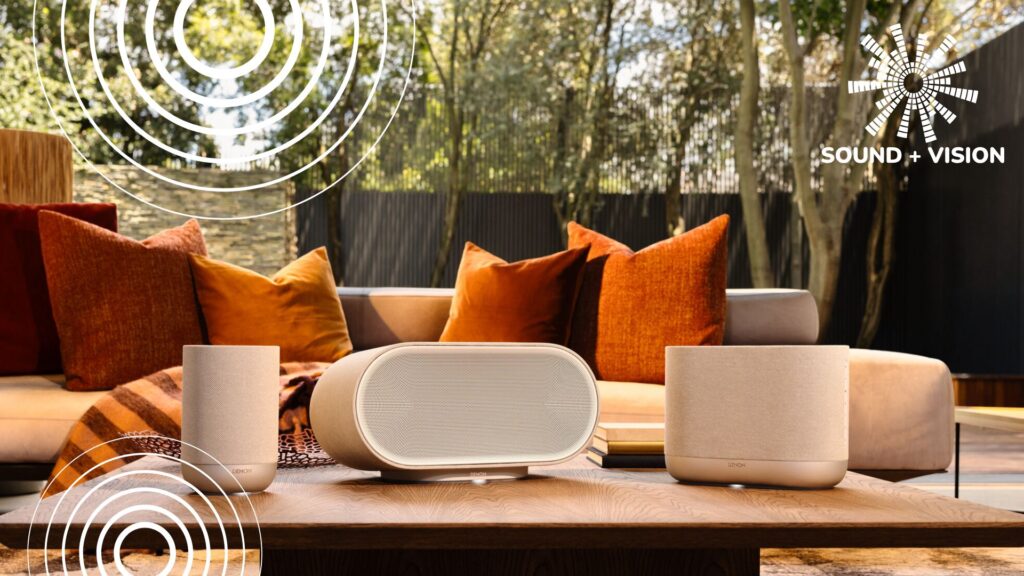
Soundbars can either feature upfiring speakers to produce the height channels, or they can use digital processing to trick the brain into thinking that sound is placed up high or out wide. Dolby Atmos FlexConnect can connect multiple speakers together that adapt to changes in room placement so no matter where they’re placed, you’ll get an immersive spread of sound.

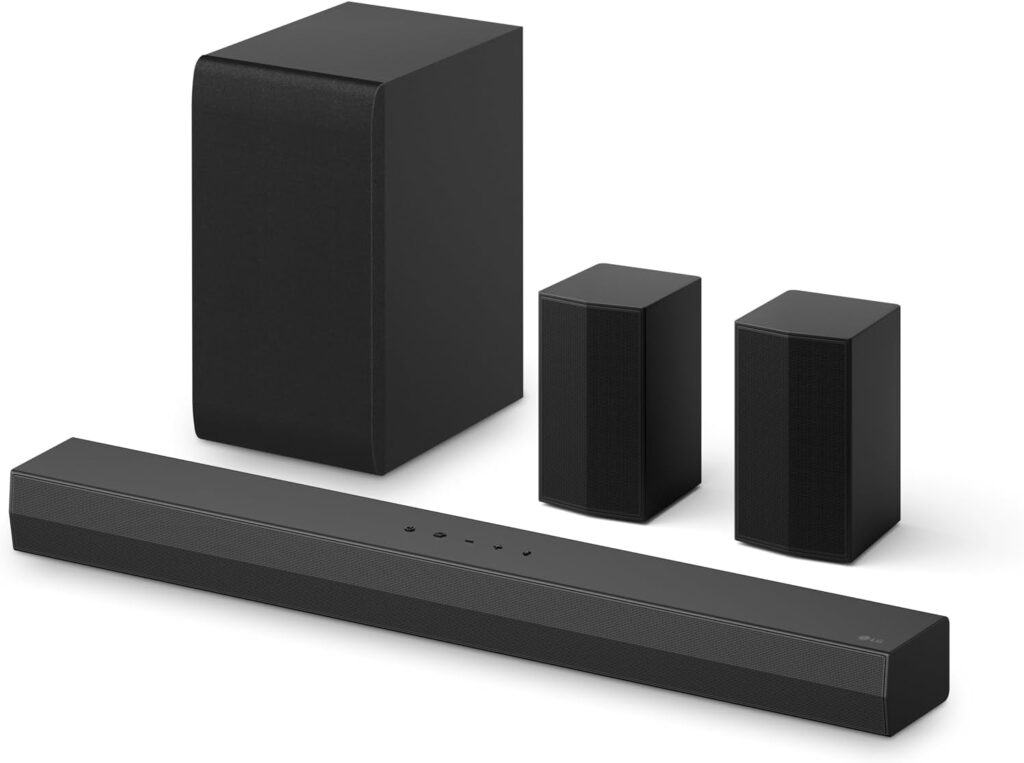
If you have space for surround speaker set-up, this would be the best way of enjoying immersive object-based audio as you’ll have rear speakers and height speakers to create a bubble of sound. A wireless soundbar system can do this on its own, but if you have a more traditional wired surround system, an AV receiver will be required to decode Atmos sound and send it to the speakers.
Home Atmos systems are capable of reproducing all 128 audio objects across from as few as seven speakers. For those who want to go all out, home Atmos systems support up to 34 speakers, but such a set-up is usually unnecessary.
But before you worry about speakers, there’s some other information to be aware of. Firstly, you won’t need a new Blu-ray player. Standard Blu-rays are capable of containing the necessary Atmos data, as are 4K Ultra HD Blu-rays, so unless you feel like upgrading to UHD Blu-ray, there are no format issues to worry about.

The amount of content has grown with each year. Sky supports it through its Premier League football and golf, events such as the Isle of Wight music festival and shows such as Portrait Artist of the Year, as well as its library of on-demand movies through Sky Glass and Sky Stream.
TNT Sports has put its weight behind the format, too, with Premier League, Champions League and ruby matches broadcast in Atmos.
The broadest range of Atmos content is available to stream from services such as Netflix, Prime Video, Apple TV, Disney+, although you’ll have to subscribe to the premium tier to access spatial audio.
Tidal, Amazon Music and Apple Music streaming services also support it, and Atmos is available through streaming boxes like the Apple TV 4K, Google TV 4K and Roku Streaming Stick.
Atmos in gaming has become more popular, whether through Windows 10 and 11 PC gaming, Sony’s PlayStation 5 and the Xbox Series S and Series X consoles.

What set-up do I need for Dolby Atmos?
For overhead speakers, you may wonder whether you need to drill holes in your ceiling to install the Atmos speakers. Thankfully, that isn’t necessary.
If you have a traditional wired home cinema set-up, you can buy specially designed Dolby Atmos speakers that integrate forward-facing speakers with upward-firing versions, rebounding sound off the ceiling to mimic the effect of overhead speakers.
If you don’t want to buy an entire new speaker set-up, there are speaker modules that can transform the existing set-up into Atmos-enabled one. It’s a case of placing the modules on top of the speakers to add upward-firing drivers.

Another way is to take the plunge and install actual overhead speakers. As mentioned, home Atmos systems will work with up to 34 speakers, so if you want a dedicated cinema space and have the budget, a custom installation is the way to go.
Before ruining the plasterboard, though, it’s worth bearing in mind that Dolby’s guidance states that using only two overhead speakers will “provide a convincing and powerful effect” while four overhead speakers will give you the “optimum sense of audio movement and precision.” This will depend on the size of your room,
Dolby’s reference guides for the best Atmos speaker set-up recommend a 5.1.4 as the set-up for enjoying Atmos, and we think that’s the minimum for having a good immersive experience.

Once you’ve chosen your AV receiver, you can upgrade your existing 5.1 or 7.1 surround sound by adding two or four ceiling speakers and either a couple of speaker modules or Atmos-enabled speakers.
The rise of Atmos in the home has also coincided with the rise of Atmos-enabled soundbars as a cheaper, less obtrusive way of getting Atmos in the home.
These simpler solutions integrate upward-firing speakers with traditional soundbar tech to deliver an Atmos experience without the hassle. The Sonos Beam 2 uses digital processing to deliver Atmos for £450.
Sennheiser’s Ambeo 3D Soundbar takes the Dolby Atmos codec and adds Ambeo 3D processing to create a massively immersive experience. It sounds fantastic, but it’s also one of the most expensive (and gigantic) soundbars on the market.

Atmos on mobile

Because Dolby Atmos is designed to adapt to whichever device you’re listening to, you can experience Atmos sound using your smartphone, tablet or headphones. Though with mobile devices, don’t expect the sense of sound above or around you – think of it as just better quality sound through the speakers.
Atmos on mobile is made possible by combining traditional virtual surround technology with the object-based audio of Dolby Atmos, the combination of the two allows headphones to reproduce a convincing version of the 3D soundscape.
Dolby has said to Trusted Reviews that manufacturers can embed Atmos into both software and hardware, which means your device doesn’t necessarily need specific hardware to use it, although we’ve seen more headphone brands, from the likes of Apple with its Spatial audio with Dolby Atmos, to Bose’s Immersive Audio, Sennheiser, Shokz and Soundcore that have added support for Atmos with head-tracking.
What is Dolby Atmos Music?

Atmos isn’t just for home cinema aficionados. Its presence has grown in the music industry too. Dolby Atmos Music does the same thing as Atmos did for cinema. Tidal, Amazon Music and Apple Music offer the biggest catalogues of Dolby Atmos Music.
The first Blu-ray audio disc with Atmos arrived in 2015 in the 25th anniversary edition of R.E.M’s Automatic For The People.
We now see (and hear) Atmos music delivered through music services on a monthly basis, from new titles mastered in the format such as Sam Smith’s When He’s Gone to classic titles to the likes of Paul McCartney/Wing’s Ban On The Run.
Spatial audio is very much part of the music landscape.
How does Dolby Atmos stack up against the competition?
Dolby isn’t the only company to have its toes in the immersive waters.

The DTS:X format was introduced in January 2015 and also uses an object-based system. Unlike Atmos, DTS:X was originally aimed at home use, before being targeted at cinemas.
In many ways DTS: X is the same as Atmos but the crucial difference is the speaker set-up. Whereas Atmos supports up to 34 speakers in the home, 64 in a cinema and requires new speakers/modules to work properly; DTS:X supports up to 32 speakers and will work with your current home speaker set-up. That means that while extra overhead speakers will enhance the DTS:X experience, they’re not necessary.

Another competing object-based, 3D audio system is Auro 3D. Developed by Belgium company Auro Technologies and officially introduced in 2006, the format is based upon a three-layer design: surround, height, and overhead.
The key difference between this system and Dolby Atmos comes down to the speaker layout. With Auro 3D, an additional row of speakers is placed above the traditional row found in 5.1 and 7.1 set-ups. This adds the height element. A single speaker is then placed on the ceiling to add the overhead dimension.
Although Auro 3D also creates a spatial sound field, the company doesn’t use the term audio objects as Dolby does. Auro’s plugins allow sound designers to dictate where sounds should originate and move to, and the format can be used in cinemas, at home, and over headphones, just as with Dolby Atmos.
Films such as The Hunger Games, The Croods, and Red Tails have used Auro 3D in the cinema, but it isn’t as popular as Atmos. It has announced that the technology is coming to more soundbar systems, as well as headphones and smart speakers.

The most recent challenger to Atmos is Eclipsa Audio. It’s based upon the open-source Immersive Audio Model and Formats (IAMF), and as it’s open-source, it’s available for anyone to use without having to pay a royalty, as you would with the technologies mentioned above.
It was developed by the Alliance for Open Media, a consortium that includes Samsung Research, Google and Netflix as an alternative to Atmos, and you can find it supported in Samsung TVs and soundbars, as well as through YouTube and Windows 11.
LG TVs support, but LG Electronics is keen to say that it supports the IAMF codec rather than the Eclipsa Audio branding. It will be coming to TVs from Hisense, TCL, and Philips, strengthening its presence in the TV market.
Atmos and VR

With virtual reality (VR) able to recreate the way we hear sounds makes all the difference to how immersive a VR experience feels.
All the way back in 2015, Dolby worked with VR content creator Jaunt to add Atmos sound to three of the company’s VR experiences: Black Mass, Kaiju Fury! and video from a Paul McCartney concert entitled Live and Let Die.
Since then, Atmos has been extended to support VR experiences on iOS, Android, OS X, and Windows. The Samsung Galaxy XR supports Atmos, and the Meta Quest 3 supports it through the Disney+ app, the web player and tools such as the HISPlayer for Unreal Engine.
Is Dolby Atmos worth it?
Dolby’s surround sound format has done the heavy lifting in bringing immersive audio to pubic consciousness, but is it worth investing your time and money into the format?
It depends on what you’re going to use it for. In our experience, while it’s good for watching TV, films and playing games in the home, it’s best if you’ve got the requisite equipment, which means having a capable soundbar and surround speakers – otherwise the Atmos effect is only half done.
If you can get surround sound speakers, then you’re getting close to the immersive experience that Dolby wants you have. If you’re not, then you’re only getting half of what Atmos can do. It’s called immersive audio for a reason.