

Blog
What Is The Minimum Voltage You Need In A Cordless Drill For Concrete?

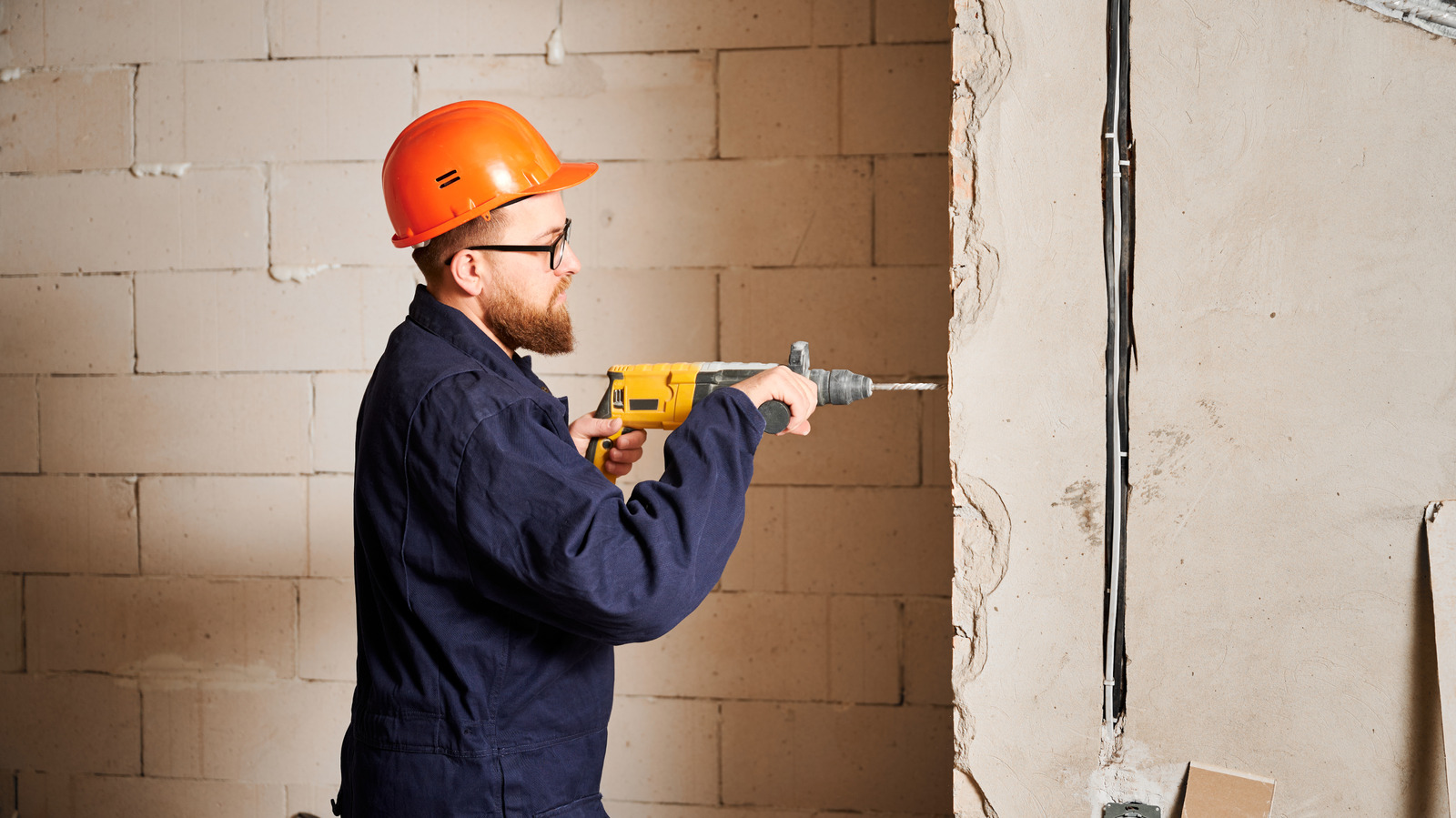
When the best cordless drills meet concrete, voltage is only part of the equation, especially if you’re shopping for good, inexpensive drills. Still, for most homeowners, 18 volts is the practical minimum worth considering. A capable 18V or 20V MAX cordless hammer drill can handle small holes, provided you use a sharp masonry bit and let the tool work at a controlled pace. Tool guides commonly place light-duty masonry in the 12-to-18V range, while denser or heavier masonry calls for 18V and above.
That does not mean a 12V drill can never touch concrete. A compact 12V hammer drill may, amongst other unexpected uses, manage occasional, shallow holes in relatively soft concrete. However, it will work more slowly, exhaust its battery faster, and struggle sooner as hole diameter, depth, or material density increases. A standard 12V drill without hammer action is an even less attractive choice because its rotating bit has to grind through the aggregate without the percussive assistance designed for masonry.
The safest short answer is 18V minimum for useful concrete drilling, with 20V MAX models occupying essentially the same class. DeWalt’s 20V MAX label refers to peak battery voltage, whereas many competing systems use an 18V nominal rating; physically, these represent the exact same voltage class. What matters more is the complete tool: its hammer mechanism, torque, impact rate, motor efficiency, chuck, battery capacity, and cooling. Voltage indicates the battery system’s class, not the exact force available at the bit during drilling or under load.
Choosing the right tool
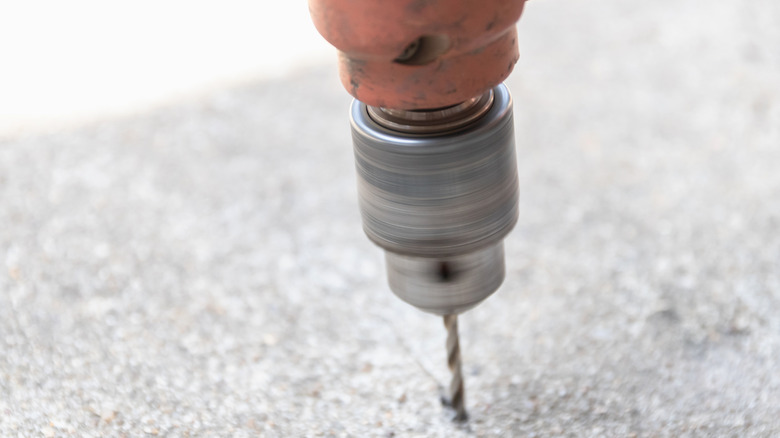
For occasional household work, choose an 18V or 20V hammer drill with a brushless motor, a two-speed gearbox, adjustable clutch, and a dependable side handle. The side handle is especially important because masonry bits can catch, and concrete drilling demands steady pressure. A larger battery, such as a 4Ah or 5Ah pack, can provide more practical runtime than a smaller pack, although they’re typically heavier.
If you’re drilling a lot of holes, working in reinforced concrete, or making larger openings, skip the conventional hammer drill and use a cordless rotary hammer with an SDS-Plus chuck. Rotary hammers use a dedicated electro-pneumatic impact mechanism that is more effective for dense concrete than the rapid gear-driven tapping found in a hammer drill. Professional and heavy-duty guidance commonly moves into the 18V-to-24V range, but the tool’s impact energy and bit system matter more than voltage alone. That extra impact reduces effort, speeds progress, and helps the bit clear concrete dust.
Before drilling, check for hidden electrical cables and plumbing, mark the desired depth, and wear eye and hearing protection. Begin slowly to keep the bit centered, then activate hammer mode once the hole is established. Avoid hammer mode when drilling tile or other fragile surfaces, and clear dust periodically so the bit does not bind.